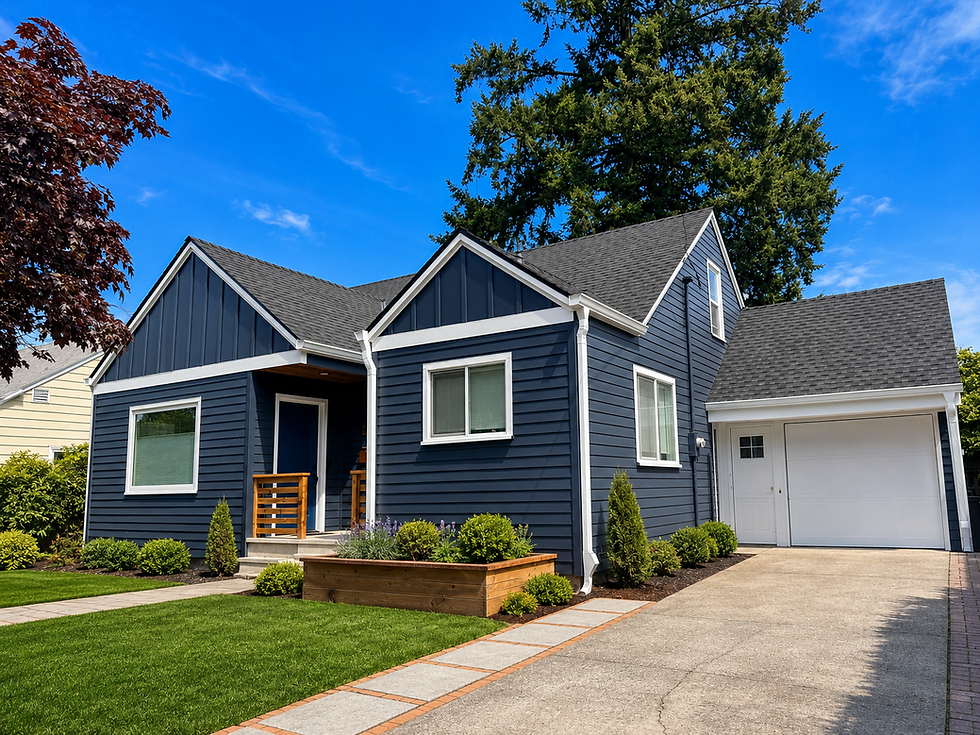
HardiePlank vs. Vinyl Siding: Comparing the Difference
Updated: Apr 2
Choosing the right siding replacement can feel overwhelming. With so many products claiming durability, low maintenance, and curb appeal, it’s hard to know which option is truly best for your home. Lifetime Remodeling Systems has been a Hardieplank Elite Preferred siding installation company for over 25 years.
For homeowners in the Pacific Northwest, the comparison between HardiePlank vs. vinyl siding is especially important. When you evaluate durability, fire resistance, maintenance, and long-term value, HardiePlank consistently stands out as the superior choice.
Below, we break down the key differences between HardiePlank siding and vinyl siding—and explain why HardiePlank is the premium option for Portland-area homes.
Table of Contents
HardiePlank vs. Vinyl Siding: Which Is Better?
HardiePlank vs. Vinyl Siding: Design & Appearance
HardiePlank vs. Vinyl Siding: Durability & Performance
HardiePlank vs. Vinyl: Fire Resistance & Combustibility
HardiePlank vs. Vinyl Siding Cost Comparison

What Is Better Vinyl Siding or Hardieplank Fiber Cement Siding?
Vinyl siding was originally developed as a lower-cost alternative to aluminum. While it performs better than aluminum, it falls short when compared to HardiePlank® fiber cement siding from James Hardie.
Many homeowners consider vinyl because of its lower upfront cost, but when it comes to siding, cheaper doesn’t mean better. Durability, safety, appearance, and long-term value matter far more—especially in the Pacific Northwest.
As we compare HardiePlank vs. vinyl siding, the difference becomes clear: HardiePlank is a premium siding product designed to outperform vinyl in nearly every category that impacts your home’s protection and value.

Hardie Board vs. Vinyl Siding: Design Differences
Curb Appeal
Curb appeal plays a major role in resale value. Choosing a premium siding like HardiePlank® can significantly improve how your home looks and how buyers perceive it—especially in the Pacific Northwest, where non-combustible siding is a strong selling point.
HardiePlank® Siding
HardiePlank offers far more design flexibility than vinyl.
▪ Multiple textures, profiles, and finishes
▪ Wide color options that closely mimic real wood
▪ Clean, high-end appearance across modern and traditional homes
Vinyl Siding
Vinyl siding is limited in both look and layout.
▪ Typically restricted to basic horizontal lap
▪ Thin plastic material with no backing
▪ More prone to cracking and warping
▪ Often appears inexpensive from the street
Vinyl cannot be installed in alternative patterns, limiting customization.
Thickness & Material Quality
Thicker siding generally means better durability and longevity.
HardiePlank
▪ Approx. 0.312 inches thick
▪ Up to 5x thicker than viny
l▪ Performs well in wind, moisture, and temperature swings
Vinyl
▪ Typically 0.035–0.042 inches thick
▪ More susceptible to damage in extreme weather

Color Options
If color flexibility matters, HardiePlank® siding offers far more options than vinyl. Some siding products limit you to preset shades, while HardiePlank allows for true customization.
HardiePlank® Siding
HardiePlank gives homeowners maximum color flexibility for both siding and trim.
▪ Available primed for paint or factory pre-finished
▪ Pre-finished colors are baked onto the board for long-lasting results
▪ Superior resistance to chipping, peeling, cracking, and fading
At Lifetime Remodeling Systems, clients also have access to a Benjamin Moore Color Consultant at no extra cost to ensure colors align with your home’s style, architecture, and current trends.
Vinyl Siding
Vinyl siding comes in multiple colors, but UV exposure causes fading over time, often leading to a blotchy or uneven appearance.
▪ Color is built into the material and cannot be refinished
▪ Can be repainted, but results vary
▪ Best limited to neutral, timeless colors like white, gray, blue, green, or brown
HardiePlank vs. Vinyl Siding: Durability Differences
The Pacific Northwest’s rain, moisture, wind, and temperature swings demand a siding material that can hold up over time. When durability matters, HardiePlank® consistently outperforms vinyl siding.
Material Composition
How each product is made plays a major role in durability and maintenance.
HardiePlank® Siding
HardiePlank is a fiber cement product designed for long-term performance.
▪ Highly resistant to moisture and insects▪ Does not warp or melt in heat
▪ Maintains appearance in harsh weather
▪ Can crack from strong impact, but resists long-term damage
Overall, HardiePlank holds its structural integrity far better in Northwest conditions.
Vinyl Siding
Vinyl siding is less durable and more vulnerable to everyday damage.
▪ Can crack in cold weather and warp in heat
▪ Easily damaged by lawn equipment or debris
▪ Prone to staining from dirt, algae, and insects
While vinyl resists moisture and insects, its appearance often degrades faster.
Maintenance Requirements
Maintenance is a key factor when comparing HardiePlank vs. vinyl siding.
HardiePlank® Maintenance
HardiePlank is a low-maintenance siding option.
▪ No frequent repainting required
▪ Resists fading and peeling
▪ Cleans easily with a garden hose
▪ No power washing recommended
With proper care, HardiePlank can last the lifetime of the home.
Vinyl Siding Maintenance
Vinyl siding is also easy to clean but requires more long-term upkeep.
▪ May need repainting every 10 years▪ Damaged sections often need replacement
▪ Typical lifespan: 20–40 years
HardiePlank vs. Vinyl: Comparing Combustibility
In the Pacific Northwest, considering combustibility when choosing your siding option is something other climates may not have to worry about.
According to the Northwest Interagency Coordination Center (NWICC), roughly 52,500 acres burned across the PNW by August 2020, and 1,054,000 acres by August 2021.
HardiePlank Siding
HardiePlank is difficult to burn. It is considered by James Hardie Industries to not be explosive or flammable, however, it is only fire-resistant, not fireproof.
If exposed to direct flames, HardiePlank will not ignite or contribute fuel to a fire.
Vinyl Siding
Compared to HardiePlank, vinyl siding is more affected by fire and extreme heat. In an attempt to combat some combustibility, vinyl siding is treated with a fire retardant, but this only slows down the spread of fire, it does not prevent it.
Homes with vinyl siding are also in danger if neighboring homes experience a fire because vinyl siding easily warps and melts from exposure. The same goes for fire pits or grills that sit too near to a vinyl siding home.
According to consumer reports, simply replacing your vinyl siding with another siding option increases your ROI by 74.7%.
For homeowners searching for siding options in the Pacific Northwest where wildfires are abundant, vinyl siding would not be the best choice.
Is HardiePlank More Expensive Than Vinyl? Comparing the Cost
Vinyl siding is almost always less expensive than a fiber-cement option like HardiePlank. The product is cheaper and the installation process is quicker, helping to keep the overall costs down.
Is cheaper always better? Definitely not.
Vinyl siding looks cheaper than HardiePlank to the naked eye. It’s thinner and doesn’t stand up well to weather and extreme conditions.
To determine the overall cost, you must consider:
Square footage of your home
Labor hours
Climate
Maintenance
HardiePlank Siding
Hardie board is generally more expensive than vinyl siding because it’s a superior product that requires more work to install and provides more benefits as a result.
There are more design options available than vinyl siding.
It’s aesthetically a more beautiful product.
It’s low-maintenance.
You can tell by looking at it that it’s a high-quality, premium product.
Vinyl Siding
More often than not, lower price points equate to cheaper products and more work in the long run.
Although vinyl siding appears to be the budget-friendly option, its long-term value makes it an inferior product to HardiePlank.
Why is vinyl siding the cheaper option?
It is both cheaper to produce and quicker (and easier) to install.
It is less durable.
It doesn’t insulate as well.
It does not decompose well.
It requires a bit more maintenance.
It likely requires repairs over time.

Ready For An Estimate? Contact Lifetime Remodeling Systems For A Free In-Home Consultation
With over 25+ years of experience designing and managing exterior home remodeling projects, Lifetime Remodeling Systems has performed an abundance of HardiePlank siding installations. Not only are we a James Hardie Elite Preferred Contractor, but we are considered the top exterior remodeler and siding contractor in Oregon.
Our team is dedicated to providing professional estimates and unbeatable customer service — all backed by our Lifetime Warranty. We strive to be your contractor for life which is why we give 100% throughout the entire process.
From meeting to providing estimates to designing, building, and closing out a project, we ensure you’re completely satisfied with the entire experience.
Our customers have peace of mind with their HardiePlank installation, which is why Lifetime Remodeling Systems is Portland’s Premier Remodeling firm.
Contact us today for an estimate.